Stairsteps and Overcoats
Like any institution, like any community, Annandale has accumulated a number of traditions over the years. Some of these refer directly to the association of the name “Annandale” with Robert the Bruce, Earl of Carrick and Lord of Annandale, later King of Scots, and are explained in more detail below. Other examples may naturally seem odd to outside observers. For instance:
- Staircases: When not in formation (or similar crowded situations, e.g. passing between classes), cadets run up staircases two steps at a time. This is actually only a requirement for new cadets (“plebes”), but older cadets maintain the practice to set a good example, as do some alumni on the faculty.
- Overcoats: AMA Cadets wear overcoats only between Thanksgiving and Easter, regardless of what the Commandant’s Office may order as the Uniform of the Day. When the weather is so severe as to warrant breaking the tradition (as does sometimes happen), the uniform is announced as “By Order of the Officer of the Day” (i.e., by the cadet officer in charge) rather than “By Order of the Commandant.”
Haddam Hall

While co-education has largely eliminated the more fraternity-boy customs formerly associated with the First Class Club, it remains the case that underclassmen set foot on the premises only at their (now rather ill-defined) peril. Even those faculty who are not themselves alumni typically enter the Hall only when invited to do so.
The Gold Star Memorial Building
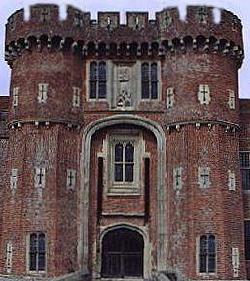
One Annandale tradition is anything but whimsical, and new students learn it on their first day on campus. Modeled on Herstmonceux Castle in East Sussex, England, the Gold Star Memorial Building (long used as the Academy library) stands a tribute to the Annandale alumni who were killed in the First World War. As they enter the building, elementary campers, midshipmen, troopers, and cadets all render the Hand Salute to the Gold Stars inset in the concrete at the top of the steps, in honor of their fallen brothers.
Bruce of Annandale
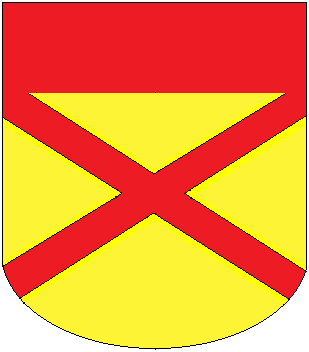
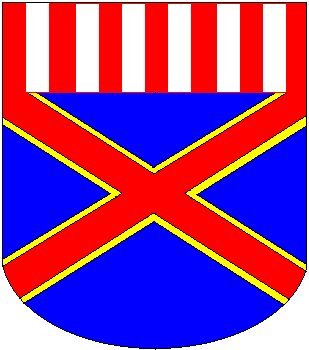
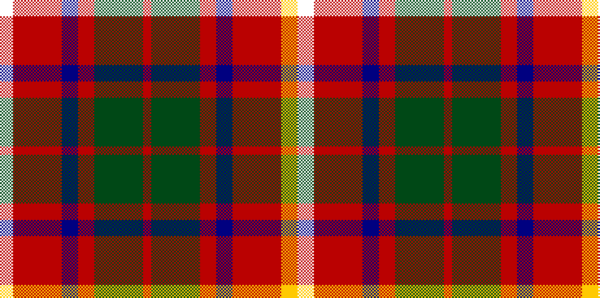
The Annandale Arms (right above) are based on those used by Robert the Bruce (1274-1329) as Lord of Annandale (left above), while the Annandale Tartan (below) combines elements of the “Old Bruce” and “Bruce” Tartans. The Academy’s colors are red and gold, taken from the original Bruce of Annandale arms, and the mascot is a lion, from the Bruce crest. Rosemary, the plant badge of Clan Bruce, is traditionally included in corsages for AMA formal balls, and is strewn in the aisles of the Chapel for the Gold Star Service.
The literary magazine is The Spider, from the legend that The Bruce, having lost a series of battles to the English, was hiding in a cave when he happened to notice a spider working to spin a web. She tried and failed repeatedly, but, after much effort, finally succeeded. Taking a lesson in persistence from the tiny animal, the king rallied his troops again, and defeated the English under Edward II at the Battle of Bannockburn (23-24 June, 1314).
“All for Annandale,” the school song, is sung to the tune of “Scots Wha Ha’e,” a poem written by Robert Burns to represent the speech The Bruce gave to his troops before the Battle of Bannockburn.